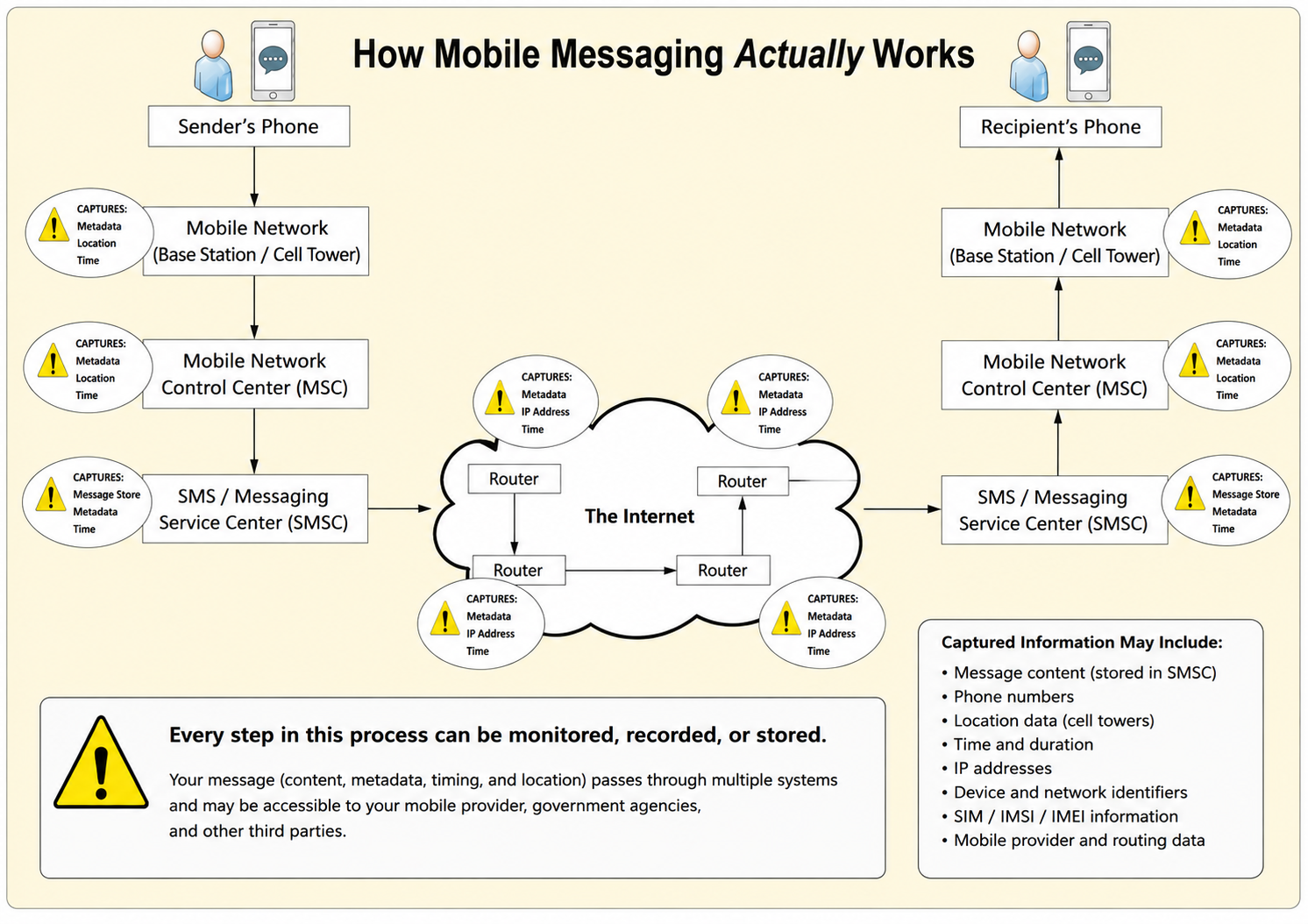
SecurityNet Explained Visually
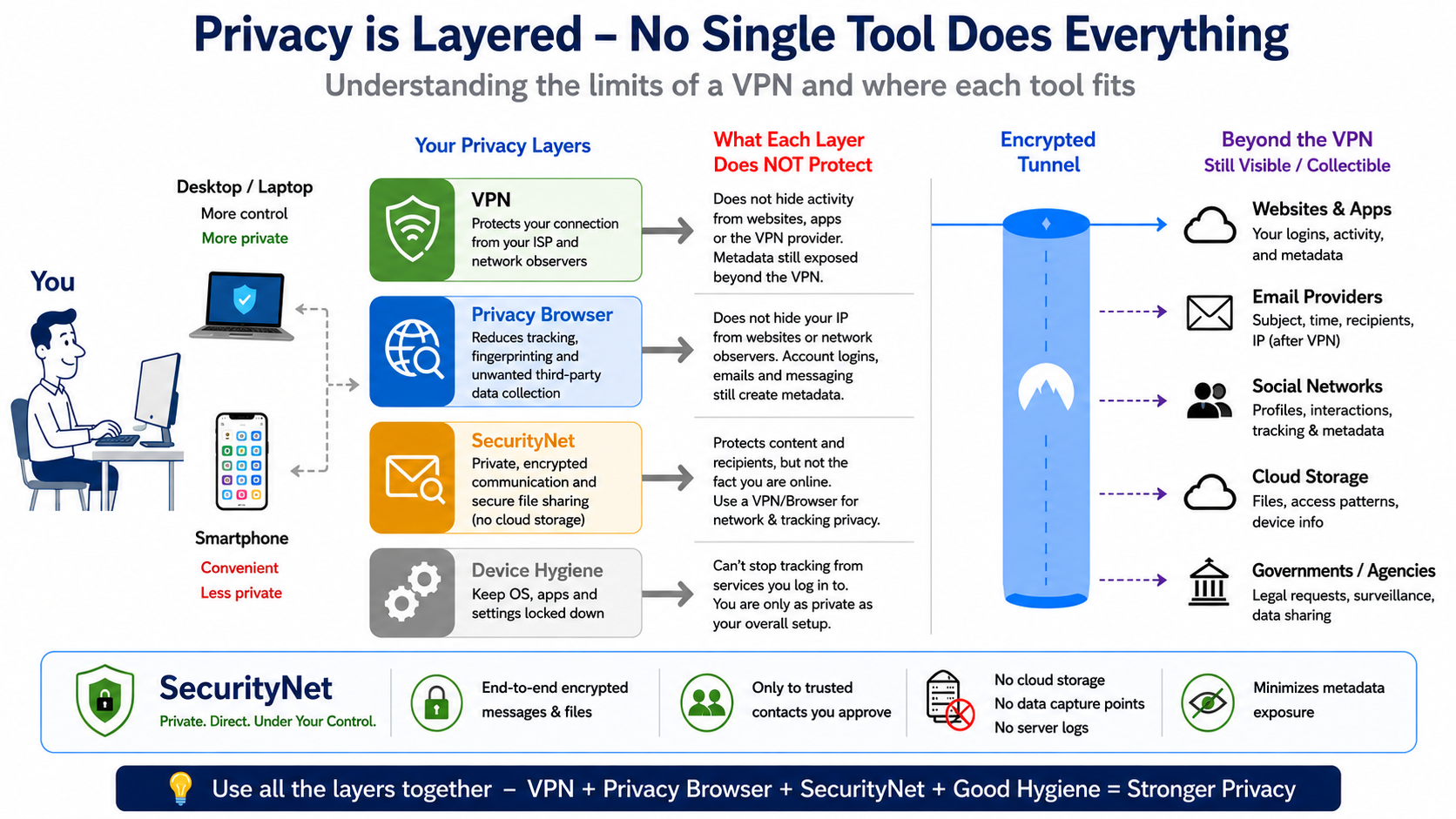
No single tool provides complete privacy or security.
  • VPNs, privacy browsers, endpoint security, and communication architecture each address different parts of the exposure surface.
  • SecurityNet is intended to operate as one layer within a broader privacy model — enabling trusted participants to communicate directly through encrypted desktop communication and file exchange without relying entirely on centralized communication ecosystems.

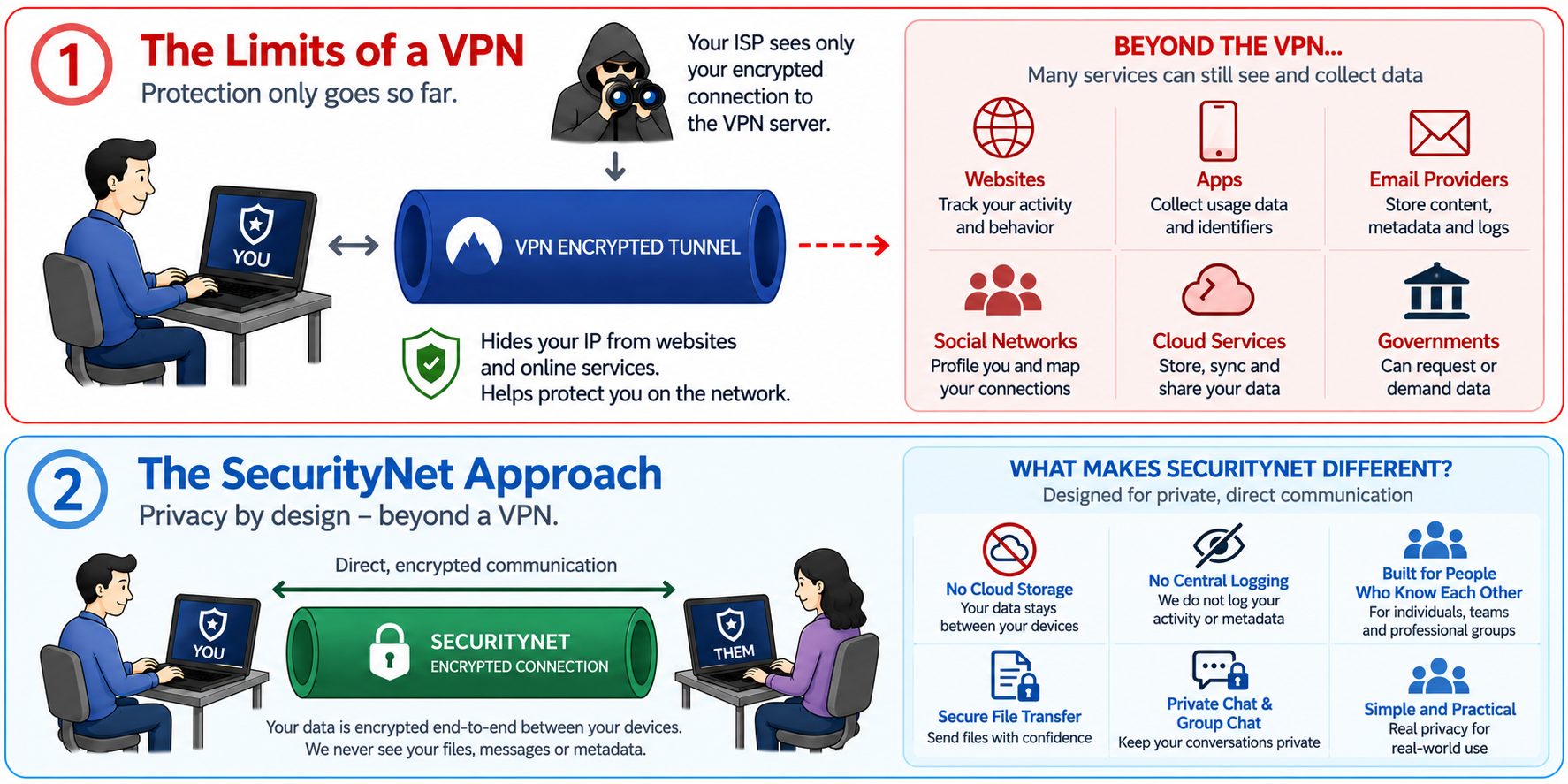
VPNs are useful tools, but they solve only part of the privacy problem.
  • A VPN primarily protects the connection between your device and the VPN provider. Beyond that encrypted tunnel, websites, cloud platforms, apps, email systems, social networks, and other centralized services may still collect, retain, profile, synchronize, or expose large amounts of communication and behavioral data.
  • SecurityNet was designed around a different architectural approach — reducing unnecessary centralized retention, metadata visibility, and uncontrolled duplication of communication data.
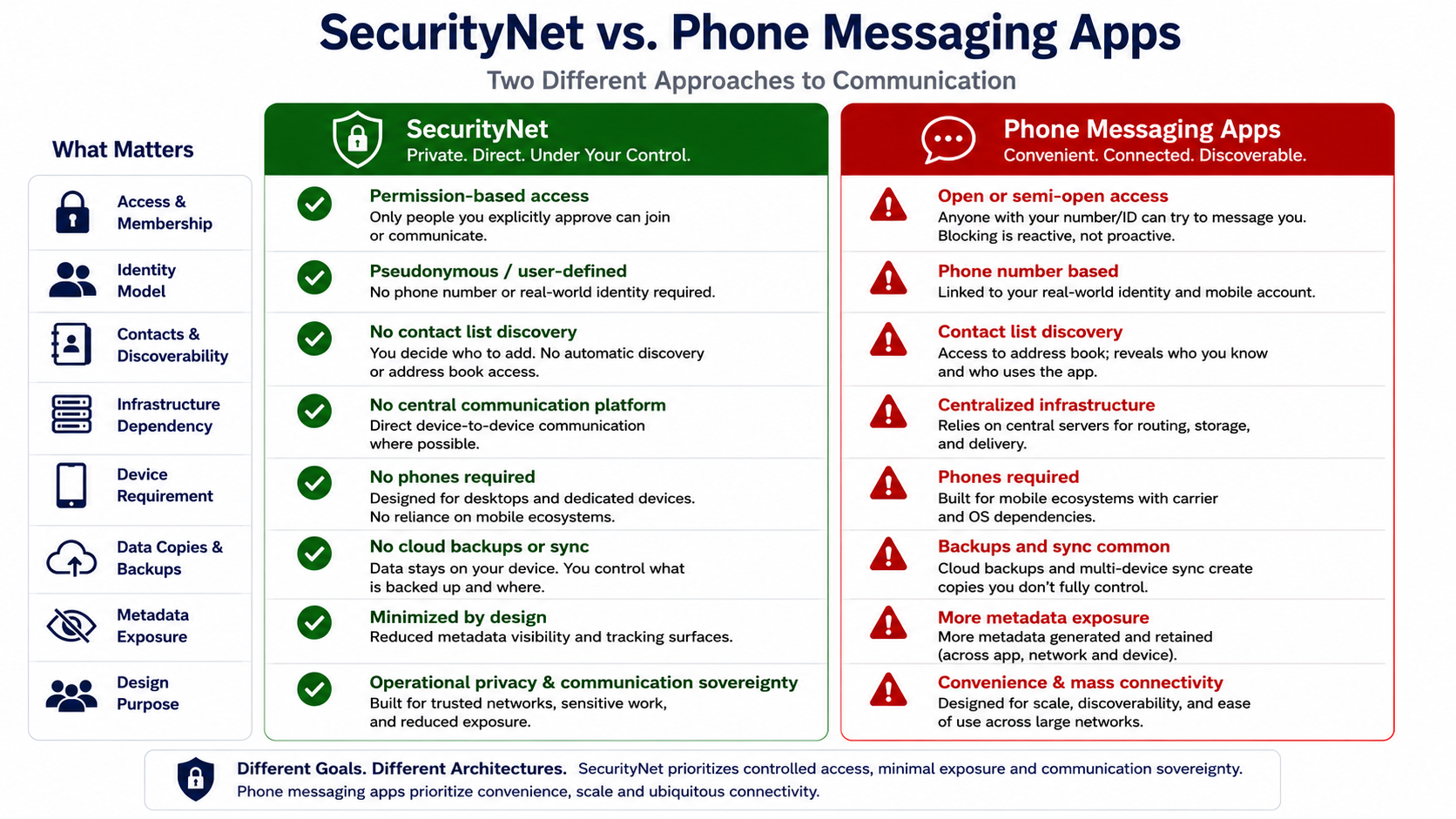
  • Most modern messaging systems are designed around convenience, discoverability, mobile integration, and large-scale connectivity.
  • SecurityNet was designed around a different operational model: controlled trusted communication networks, explicit permission-based access, minimized metadata exposure, and reduced dependency on centralized communication infrastructure.
  • The goal is not mass social connectivity, but more deliberate and privacy-conscious communication between trusted participants.

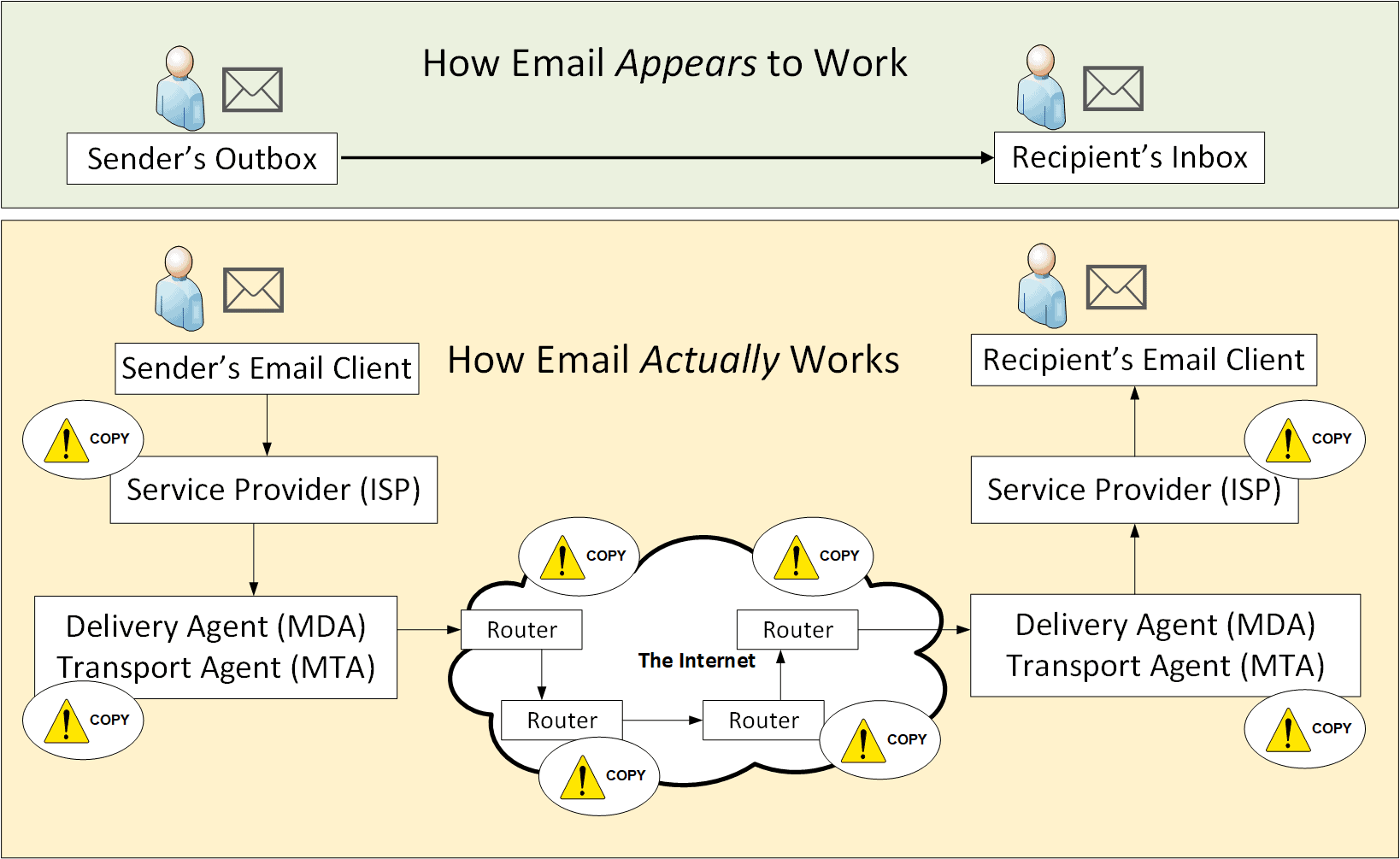
Traditional Communication

Most communication systems rely on intermediaries that can create additional copies,

collect metadata, or retain information as messages move between participants.
SecurityNet works differently
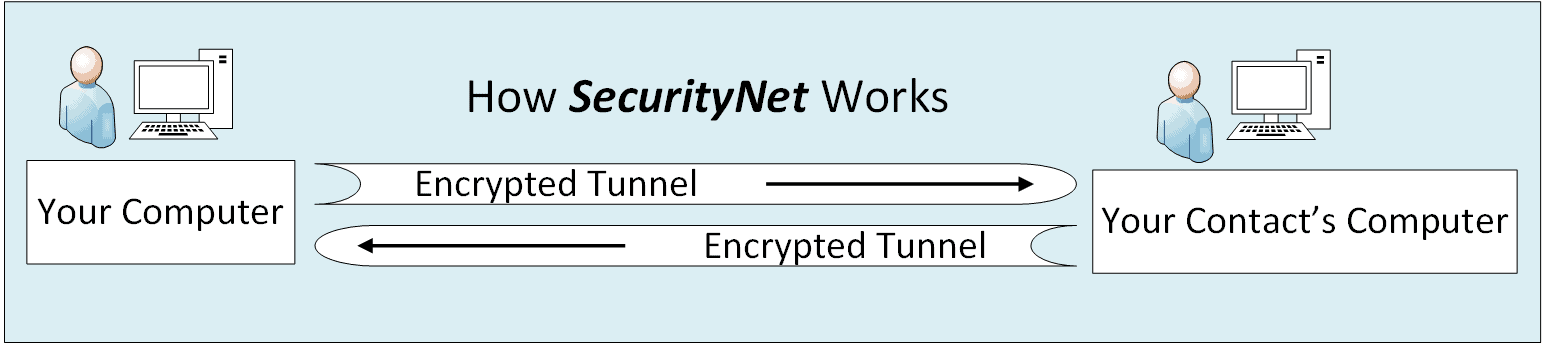
No data capture points, no server logs, no tracking